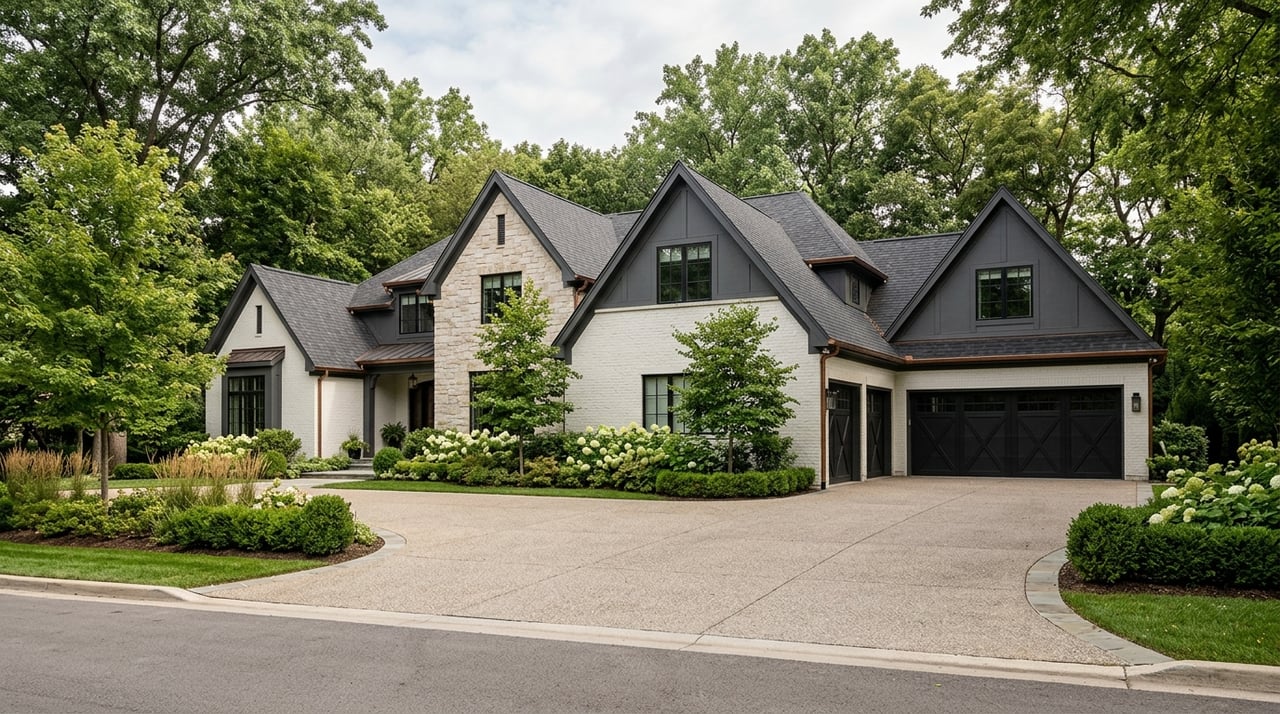
Is Bloomfield Township Right For Your Next Move Up
June 25, 2026
June 25, 2026
Wondering if Bloomfield Township makes sense for your next move up? If you want more space, a more established setting, and a home that better matches your next chapter, this township often lands on the shortlist for good reason. The key is knowing what you are really buying into, from lot size and home style to rules, costs, and daily convenience. Let’s dive in.
Bloomfield Township is a strong move-up option for buyers who want an established Oakland County address with larger parcels, mature landscaping, and a polished residential feel. The township describes itself as about 95 percent residential, with rolling hills, winding roads, and scenic lakes and streams.
That setting creates a very different experience from a denser, more urban-style suburb. If you are hoping for more privacy, more greenery, and a neighborhood that feels settled rather than newly built, Bloomfield Township checks many of those boxes.
Moving up in Bloomfield Township usually means paying a premium for location, lot quality, and neighborhood stability. Current Census data show a median owner-occupied home value of $604,800 and median monthly owner costs with a mortgage of $3,131.
Those figures are well above Oakland County overall, where the median home value is $343,600 and median monthly owner costs with a mortgage are $1,998. In simple terms, Bloomfield Township can deliver more space and a strong residential setting, but your carrying costs will likely rise too.
One of the biggest reasons buyers look here is the housing stock. According to the township master plan, 70 percent of the homes are more than 26 years old, with much of the housing built in the 1950s and 1960s.
That age is part of the appeal for many move-up buyers. You will find neighborhoods with mature trees, established streetscapes, and homes that often sit on more generous lots than in newer subdivisions.
Bloomfield Township is not one-note. The township’s existing-conditions report notes that neighborhoods range from smaller, more urban-style streets near Maple and Cranbrook to wooded cul-de-sacs, large lots, and lakefront properties.
That variety matters if you are comparing lifestyle options. Some buyers want a classic neighborhood setting with an established feel, while others want a more secluded parcel or a property with room to expand.
Because much of the housing stock is older, demolition, major renovation, and tear-down or rebuild activity are common. For a move-up buyer, that can be a major advantage if you want a prime location now and the option to improve the property over time.
It also means you should look beyond finishes alone. In Bloomfield Township, lot quality, layout potential, and site conditions can be just as important as the home’s current condition.
Bloomfield Township is not a loose-lot suburb. The zoning ordinance sets one-family minimum lot areas from 16,000 square feet with sewer in R-1 districts to 30,000 square feet without sewer in R-3 districts, along with setback requirements and a maximum lot width-to-depth ratio of 1:4.
That structure helps preserve the township’s spacious character. It also means that if you are planning an addition, pool, major remodel, or rebuild, you need to understand the site’s constraints early.
Township zoning is only part of the picture. The ordinance states that subdivision deed restrictions can be more restrictive than township rules, so you cannot assume zoning alone tells you what is possible.
Bloomfield Township also has more than 100 homeowner associations. For buyers who value consistency and neighborhood upkeep, that can be a plus. For buyers who want fewer restrictions, it is a factor to review carefully before you buy.
If you are considering major changes to a property, due diligence matters. The township has a tree preservation ordinance for new construction and redevelopment, wetlands permitting for work in designated wetlands, and a separate lot-split process handled under the general ordinance.
These layers can help protect neighborhood character and natural features. At the same time, they can add time, paperwork, and cost to a project, especially if you are buying with plans to renovate quickly.
Not every move-up buyer wants a large yard or a full custom-home project. The township master plan says attached single-family homes and multifamily housing are concentrated near Telegraph Road and Woodward Avenue, offering condos, apartments, and other lower-maintenance options.
That gives you more flexibility if your next move is about simplifying rather than maximizing square footage. It can also be useful if you want to stay in the community while changing your day-to-day upkeep.
Bloomfield Township offers access to major regional roads, including Telegraph, Woodward, Maple, Quarton, Square Lake, Adams, Franklin, Lahser, and 14 Mile. SMART fixed routes serve Maple, Telegraph, and Woodward, plus the Opdyke and Adams border, and the township has a connected safety-path network along many major roads.
Still, most households will rely heavily on a car. If your ideal lifestyle involves walking to most daily errands or using transit as your main way around, Bloomfield Township may feel less convenient than a more urban setting.
For many move-up buyers, commute time is part of the equation. Census data show a mean travel time to work of 24.1 minutes in Bloomfield Township, compared with 25.8 minutes across Oakland County.
That does not make it an urban-style short commute market. It does suggest that many buyers can move into a more spacious residential setting without pushing far beyond a typical regional commute window.
A major practical advantage here is infrastructure. Bloomfield Township is the only township in Michigan with its own Road Division, maintaining 176 miles of subdivision roads and 37 miles of unpaved gravel roads, while major roads are maintained by the Road Commission for Oakland County.
For buyers, that supports the township’s reputation for strong municipal services. It is also worth noting that some road improvements may be handled through special assessment districts, which can affect long-term budgeting for a property.
The appeal of Bloomfield Township is not just the homes. The township highlights the Johnson Nature Center, with its 40-acre site and roughly 2 miles of trails, along with the Bloomfield Township Public Library, Bowers School Farm, and a senior center with lifelong-learning and supportive services.
These amenities contribute to a community that feels established and intentionally maintained. If you are looking for a suburb with a strong residential identity and local resources that support day-to-day life, that matters.
If schools are part of your planning, Bloomfield Township requires careful address-level confirmation. The township identifies Bloomfield Hills Public Schools, Birmingham Public Schools, Pontiac Public Schools, and Avondale Public Schools as serving portions of the township, and it states that the district map is for reference only.
That means two nearby homes may not share the same district assignment. The township also notes that school millage rates vary by district, so property taxes can differ depending on where the home is located.
Part of Bloomfield Township’s polished appearance comes from its regulatory environment. The township uses the International Property Maintenance Code to address grass height, junk vehicles, trash storage, and exterior building conditions.
For many buyers, that level of structure supports neighborhood consistency and long-term appearance. If you prefer a suburb with fewer rules and less oversight, though, this may feel more restrictive than other options.
Bloomfield Township tends to be a strong fit if you want more space, established neighborhoods, and the possibility of renovating or rebuilding in a well-regarded residential setting. It also suits buyers who are comfortable paying more for lot quality, municipal standards, and long-term neighborhood stability.
It may be less compelling if your top priorities are lower ownership costs, minimal HOA or permit friction, or a highly walkable, transit-first routine. In other words, this is often the right move-up market for buyers who value setting, space, and structure.
If your next move is about upgrading your environment as much as your house, Bloomfield Township deserves a serious look. You will likely pay more, and you may need to navigate more rules, but many buyers see that trade as worthwhile for the larger parcels, mature neighborhoods, and strong community standards.
The right home here is about more than square footage. It is about matching your budget, lifestyle, and long-term plans to a township that offers a distinct kind of Oakland County living.
If you want help comparing neighborhoods, evaluating lot potential, or identifying the right move-up opportunity in Bloomfield Township, Erin Dewald offers local guidance, thoughtful strategy, and a polished buying experience.
Stay up to date on the latest real estate trends.
Partner with a trusted Birmingham real estate expert known for hands-on service and exceptional outcomes.